Most groups come to me with a destination already in mind. A smaller number come with a budget spreadsheet and a question: is there a way for the trip to pay their organisation something back? Yes, and it is simpler to set up than most boards expect.
What the Giving-Back Model Means in Practice
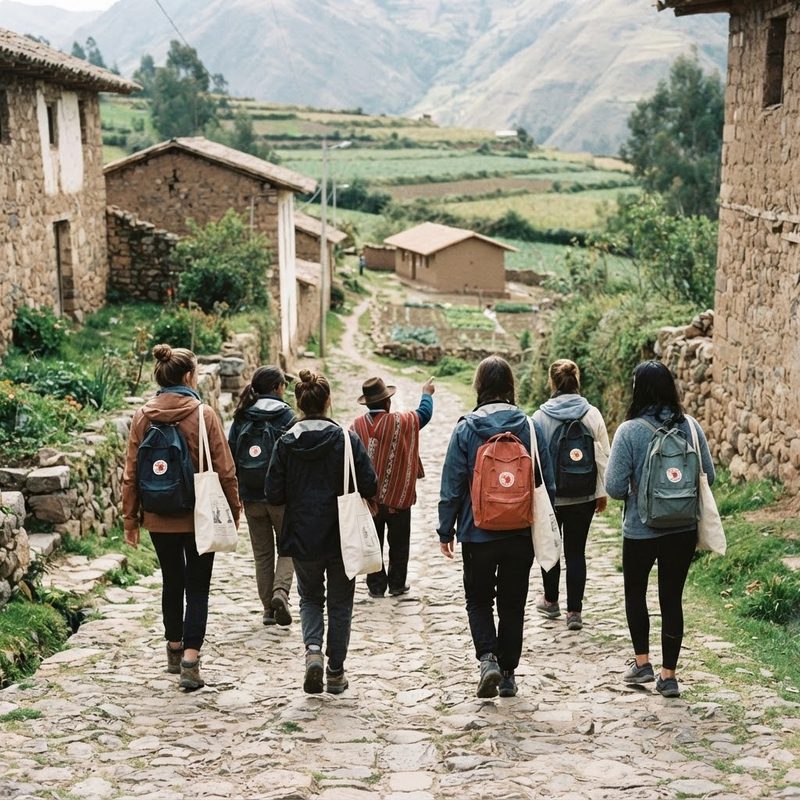
The mechanism is straightforward. Your group travels on a properly built custom itinerary, and once it runs, a share of the funding returns to your organisation to support your mission or your project. The trip itself does not change: same planning standards, same hotels, same guides on the ground. What changes is where part of the money ends up.
I treat this as a fundraising channel with a holiday attached, which means I plan it like a fundraiser. There is a target, a headcount and a date, and those three numbers decide the outcome long before anyone boards a plane.
It also means the trip has to stand on its own. Nobody books a mediocre week because of what happens to the money afterwards, so the itinerary gets planned first, to the standard you would want if there were no contribution involved at all.
Trips We Build This Way
Every route is designed around what your group actually cares about, whether that is cultural discovery, heritage, education or simply time together. Common shapes include:
- Pilgrimage and cultural journeys through Europe, or to the Holy Land, for church groups
- Food-led cultural routes through Italy, Spain and France
- Heritage trips to Ireland or Scotland for alumni and family groups
- Art, history and architecture exploration across Europe
- Educational and cultural discovery tours for community organisations
None of these are fixed departures. Each one is drafted for your people, your dates and your pace, which matters when a group mixes seventy-year-olds with students.
How It Works, Step by Step
The process has three stages, and your organisation only owns the first one:
- Gather your people. A school, congregation, nonprofit, alumni association or community club collects the travellers who want to go together. An expression of interest form is enough at this stage.
- We build the trip. I put together a custom itinerary matched to the group's interests: cultural, culinary, educational or heritage, with dates, hotels and a price per person attached.
- The trip funds your cause. When the group travels, a contribution is returned to your organisation to put toward the mission or project you named.
The arithmetic is worth doing out loud before you present anything. A group of twenty travellers contributing two hundred dollars each returns four thousand dollars to the organisation. Thirty travellers at the same rate returns six thousand. That is a meaningful line item for a parish roof, a club season or a classroom fund, and it costs each participant nothing beyond the trip they were taking anyway.
Groups This Suits
If your organisation already has people who travel together, the model fits. It works especially well for:
- Schools and educational groups
- Churches and faith communities
- Nonprofit organisations
- Alumni associations
- Cultural and heritage societies
- Community clubs and special-interest groups
The common factor is trust. People sign up faster when the invitation comes from someone they already know, which is also why these groups fill with fewer reminders than a trip sold to strangers.
The Numbers to Line Up First
Before you announce anything, fix three figures: the target contribution, the expected headcount and the price per person those two imply. If the price lands above what your group usually accepts, you have three levers and they work in this order: length of trip, standard of hotels, and season. Ten days in an ordinary month is a different sale from fourteen days in July.
Allow about eight weeks between the first announcement and the deposit deadline. Groups that move faster than that tend to lose the people who need to ask a spouse or a finance committee, and those are usually the people who were most likely to come.
I also ask for one honest number up front: how many of your members would genuinely go. Optimism is not a headcount, and a plan built on it produces a smaller cheque at the end.
Two more numbers are worth agreeing before the announcement goes out: what the contribution will be spent on, and when the group will see the figure. Naming a specific project, a repair or a bursary, gives people a reason to pay a deposit that a general promise of support never does. The same applies to the timetable. A group that is told the total in the week they return stays engaged; one that hears nothing until the following autumn assumes the money went somewhere else.
What You Get Beyond the Itinerary
Group travel has been the whole business here for over thirty years, and the giving-back option sits on top of that infrastructure rather than replacing it.
- Custom trip design for private groups, drafted around your theme rather than a catalogue
- Partners and local support teams in each destination, so somebody who lives there runs the day
- Flexible payment plans so your travellers can pay in instalments instead of one lump sum
- Registration and reporting handled by us, including the paperwork your treasurer will ask for
Everything administrative runs through us: bookings, supplier payments, confirmations and the emergency contact line while the group is away. Your volunteers keep their evenings.
The trips themselves stay ordinary in the best sense. Comfortable hotels near the centre, a coach that fits the group, guides who answer questions rather than recite scripts, and enough free time that people can sit in a square and do nothing. Nobody has ever complained to me about too much free time.
Getting to a Decision
Bring me three things and I can give you a route: the cause you want funded, a rough headcount, and two or three windows your group could travel in. From there I draft an itinerary with a price per person and the projected contribution written into the same document, so your committee sees the trip and the return on one page.
If the numbers do not work the first time, we adjust the trip rather than the contribution. The point is that your people come home with photographs and your organisation comes home with funds, and neither should be sacrificed for the other.
For committees, I put the whole case on one page: route, dates, price per person, expected contribution, deposit deadline. It is the document a treasurer can approve without a meeting, and it is usually the difference between a decision in February and a decision in June, when the good flight prices have already gone.